


Last Thursday we ran OX3 in Stockholm. It was our first Operator Experience outside the UK and our largest room so far, with operators from Nordic and UK brands spending the afternoon on how AI is being used across the product lifecycle.
It was also the first time we handed the content for the day over to our partners. Stockholm is a new market for us, so we leaned on our Swedish sponsors Resourced, Emfas, Centra and Dema to drive the programme. Our brief was to carry a product from idea to data to inventory to sold to optimised, and they built the afternoon around it with show and tells from Disentis, Björn Borg, Nudie Jeans and Wallism. We’re grateful they were there to do that for us.
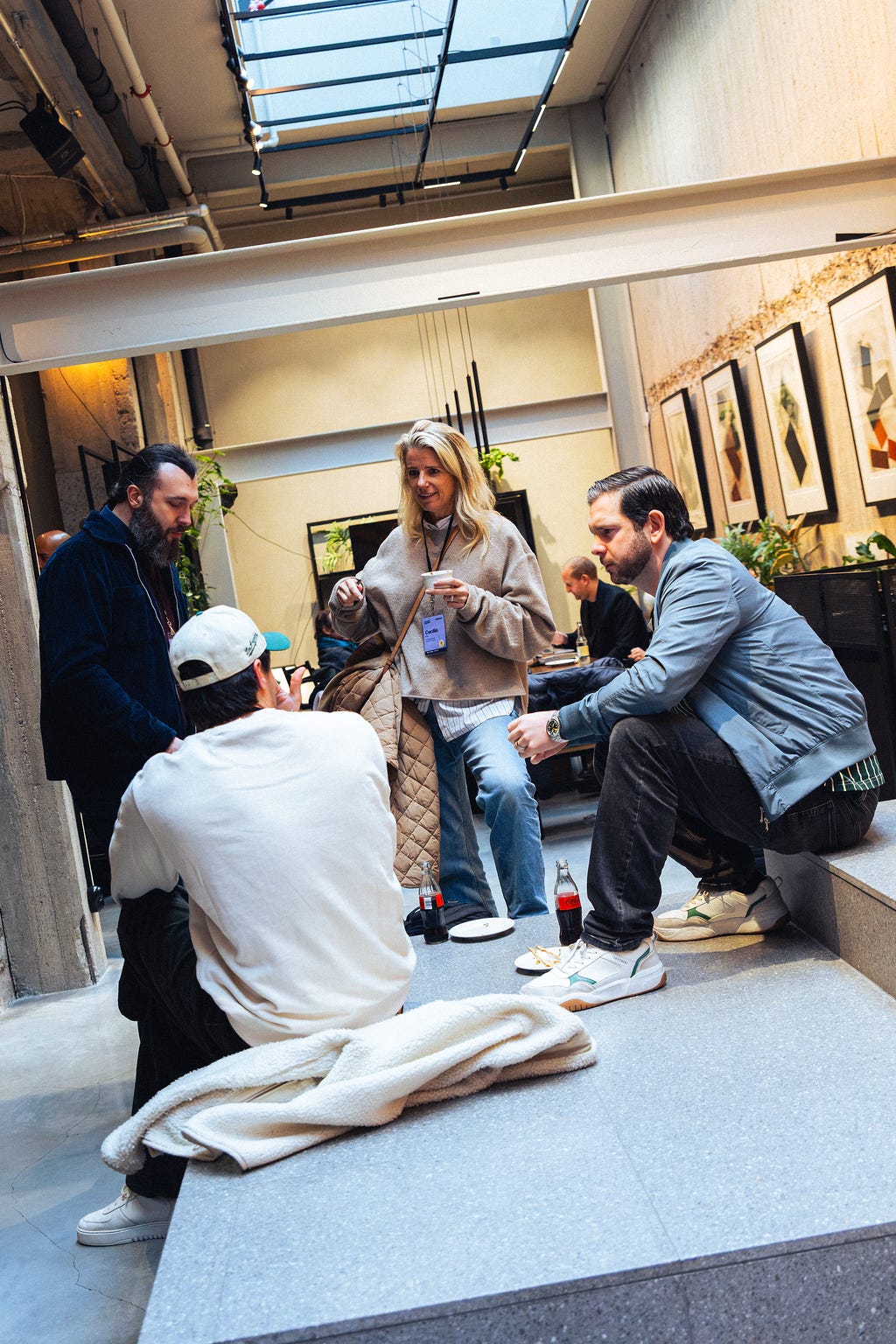
What the brands showed
Maria from Disentis opened on pricing, with PLM partner Resourced. With 16 base price lists across overlapping seasons, currencies and channels, a price change used to mean someone working through a holiday to update everything by hand on a set date. They now run a single source of truth that pushes each price to the right system at the right time. Their advice to the room was to get the structure right before automating any of it.
Robin from Björn Borg and Emfas walked through eighteen months of product data work, with more than 200,000 attributes enriched across eight languages and feeds running to 38 channels. They had ChatGPT feeds live within about two weeks of the Nordic launch. Ten automations now run across products, variants and images, and new collections go live in half the time.
Nudie Jeans’ Tech Lead, Melker, showed what building with the Centra MCP looks like in production. Nudie fulfils online orders from its stores, and they built a morning dashboard showing where orders are being rejected and how long stores take to accept them. The next step is turning it from a dashboard into alerts sent to the right people.
Mårten from Wallism closed the session with Dema. The custom wallpaper business turns over more than 200 million kr across 15 markets, and Mårten is the whole marketing team. He treats growth as an allocation problem, moving budget between markets, and has gone from one-off experiments to apps built around his own process. One he uses to manage Google campaigns across every market saves him half a day.
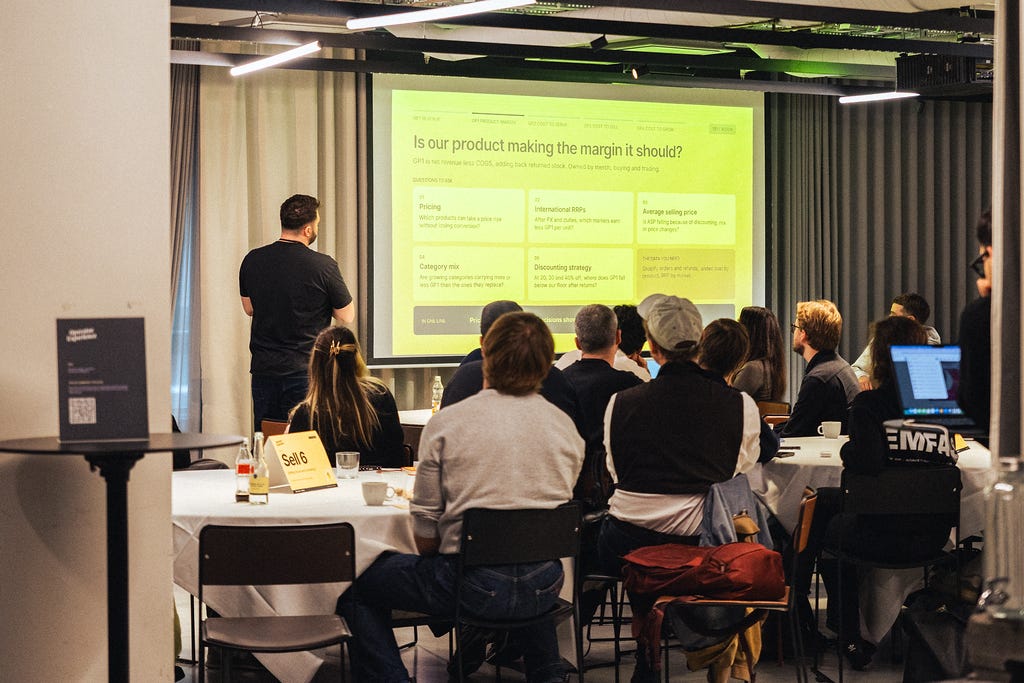
What we took away
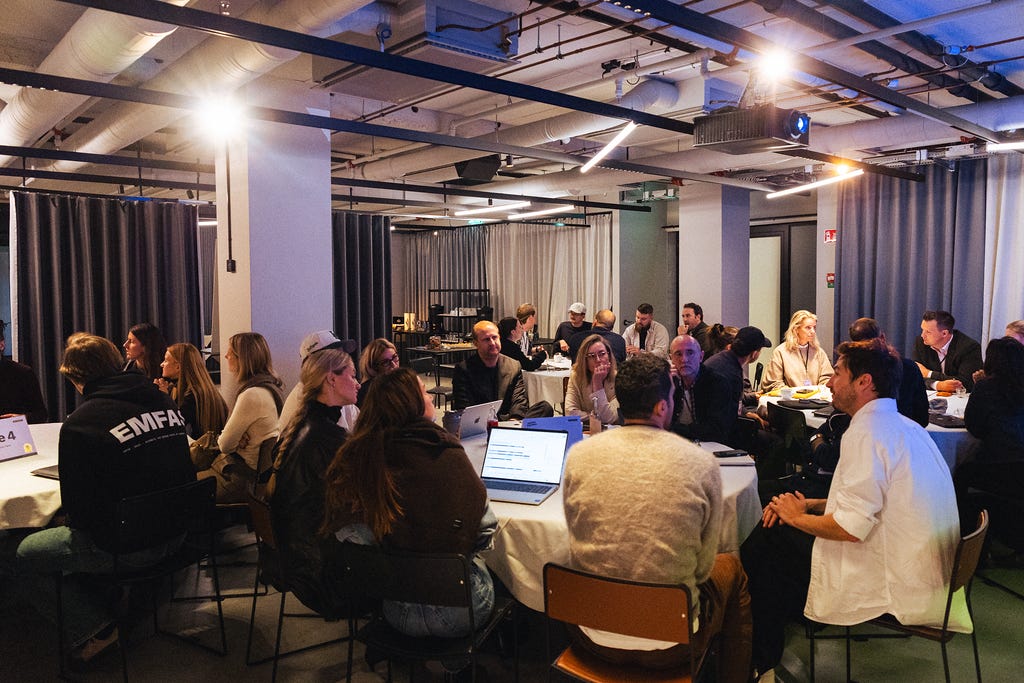
After the break the room split in two. The Make room was led by me, Luke, with Elias from Resourced, Vidar from Emfas and Amy from my team at Commerce Thinking, and focussed on getting a product to market more efficiently with AI. The Sell room opened with Lauren, our GM, alongside Greg Thorndick from Whānau Advisory, Henrik from Dema and Finn from Centra, on driving more efficient margin, with AI.
Across both the show and tells and the workshops, the same themes appeared continuously.
Data is still the limit.
74% of the room said they use AI regularly, up from 61% at OX1 and 71% at OX2. But 42% named accurate data flowing between systems as their biggest challenge, and both Disentis and Björn Borg had earlier explained how they sorted out data structure and system ownership before they automated anything.
Trust decides whether a tool gets used.
Patrick from Dema told the Make room that most merchants he works with already own forecasting tools but don’t use them, because they don’t trust what goes in. Björn Borg built trust gradually, reviewing everything Emfas proposed before publishing, and a person still signs off on it today. Give AI power, but not full control.
Build first, then buy.
The advice at the Sell tables was to build agents yourself until you hit a ceiling, then buy, and to be wary of stacking up tools that are thin layers over the same AI models. You must consider your wider AI stack before doing anything.
Finance and ecommerce need the same definitions.
Greg’s rule is that finance records and ecommerce decides, with margin levels agreed between them up front. If the data is within 10%, it is good enough to make the call. Henrik warned that as each team builds its own agents, data silos turn into agent silos, each optimising for something different.
Margin depends on how you sell.
Finn shared an outdoor brand that replaced public promotions with hidden campaigns targeted by customer group and market. In a year, the share of products sold on promotion fell from 50% to 10%, and orders doubled.
Plan peak from the bottom up.
Henrik’s advice for Black Friday was to build the forecast from last year’s numbers, current stock and how much more your existing customers can realistically buy. He said targets that extrapolate this year’s growth are often close to impossible to hit.
If you can relate to these conversations, and want to be in the room for the next round of learnings, apply at operatorexperience.ai.