


Last Thursday was OX2, the second Operator Experience event, at Coin Street Conference Centre in London. Full disclosure before anything else: OX is co-founded by myself and Lauren. And Commerce Thinking hosted one of the afternoon tables, so this is a write-up from inside the tent. Judge the substance for yourself. There’s plenty of it.
What OX is trying to be
We opened with the premise. OX exists to help brand leaders and operators navigate the AI era together, collaboratively, rather than each business figuring it out alone in a tab full of vendor webinars. The event is free for brands, and deliberately so: no cold sponsorship outreach, every partner in the room is someone the founders have worked with personally, in some cases for fifteen years plus.
The framing slide is worth passing on because it’s a useful mirror. Inside every brand there are passengers, waiting for someone else to lead on AI. Lone wolves, independently capable but building alone. Enthusiasts, great at bringing people with them but fuzzy on the tech, often at exec level. And catalysts, the rare combination of high AI clarity and high enablement of others. OX’s stated mission is to turn the people in the room into catalysts and help brands identify and grow their own. It’s a generalisation, and it’s also the most useful two-by-two we’ve seen on this topic.
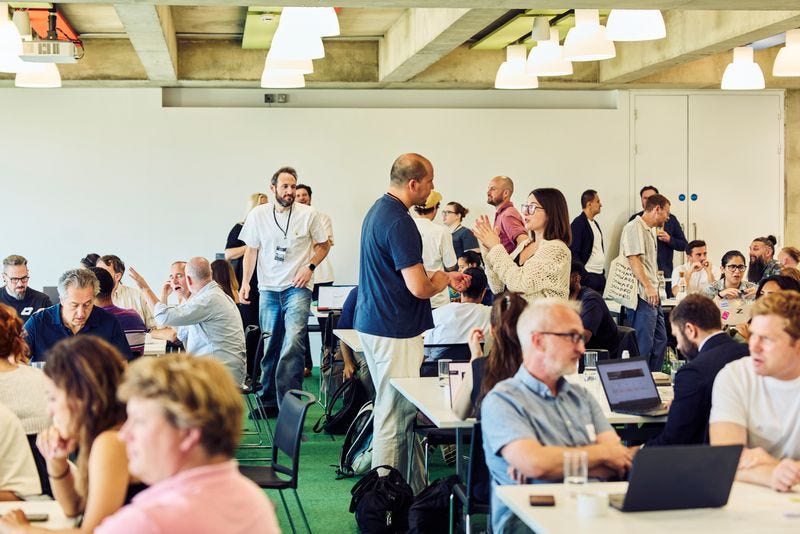
The other structural note: OX1’s feedback was unanimous that the brand show-and-tells were the point, so OX2 handed the entire morning to three brands showing what they’ve actually built. Not slideware. The real things, running.
The morning: three brands, three builds
Paul Heath, Adanola
He opened with the most complete data story of the day. Seven months ago he joined as a data leader the day before the only data engineer left, inheriting a two-year-old Power BI and Azure estate and a daily diet of “why don’t the numbers match?”
His first decision is the one worth quoting to every new data hire: don’t rip it out. The Azure stack would do the job. It needed restructuring, not replacing, so he moved it to a medallion architecture, raw, verified, cleansed, modelled, which is twenty-five-year-old thinking and works precisely because it is.
Seven months later: a team of seven, over 250 pipelines running around the clock with Claude-assisted automation on the failure handling, fifteen rebuilt Power BI reports sitting on a single semantic model instead of per-report logic, and, the bit merch actually cares about, a stock rebalancer that takes sales and stock data, works out cover by weeks of stock, and raises the purchase orders back into NetSuite automatically.
Then the showpiece.
When his agentic analytics budget met reality, Microsoft’s MCP endpoints wouldn’t authenticate the way his end users needed, so he asked Claude for an alternative and built a wrapper on the Claude API instead. Total effort, about five days.
The result is ANA, a conversational analytics assistant the merch team named themselves: natural language questions against the Power BI data model, answers with the working shown, suggested drill-downs that change with the question, export to Excel, all behind the normal Microsoft sign-in so nobody sees data they couldn’t already see. It routes simple questions to a cheap model and hard ones to a bigger one, and he estimates $20 per ten to twenty thousand questions. Rollout to the first ten users starts early August.
His closing point was the one the room wrote down. He’d watched another business demo almost the same screen the week before and admit it hallucinates. The difference, he argued, is four ingredients: good data, a proper data model, context (the business rules a model can’t guess, like “you can’t sum a stock snapshot”), and an ontology for the synonyms, so “gross revenue” means the same thing to the machine as it does to finance. With those four, he claims 99.9%. Without them, you’ve built a confident liar.
Roberta, Technology Solutions Manager at Bluebella,
She showed the build we suspect the most people will copy: a discrepancy dashboard estate that answers one question across the stack, where do our systems disagree? Her diagnosis of the underlying problem was the best articulation of it we’ve heard.
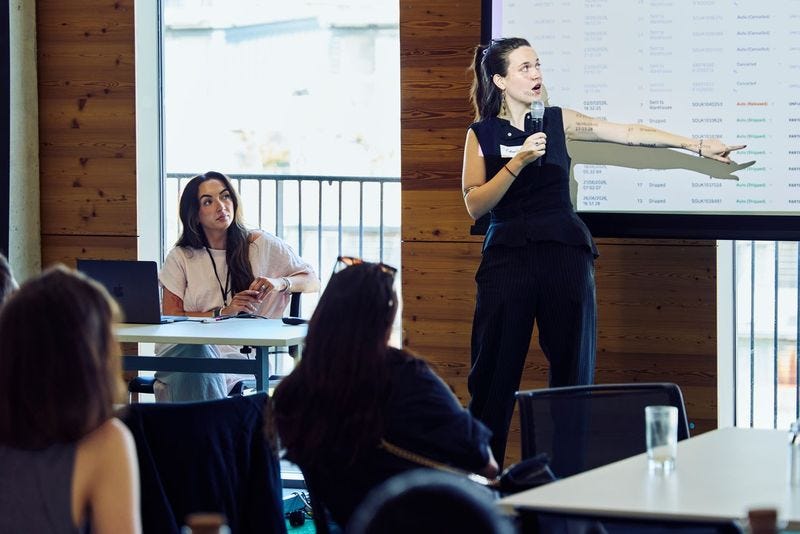
Every team finds cross-platform issues at the worst possible moment for that team: finance at month-end reconciliation, merch just before a launch, ops when a batch of orders has already gone wrong, customer service when somebody complains. Anything that falls between platforms lands on the tech team, late. The dashboard means she finds things the day they happen instead.
The estate covers stock reconciliation across NetSuite and two Shopify instances, orders stuck mid-journey, fulfilment states, despatch speed, and a dedicated ASOS card, because every marketplace has fields and formats that match nothing else. The plumbing runs nightly in n8n: pull from each platform, merge, diff, snapshot, with the previous night’s version kept so every morning there’s a “fixed since last run” view and a briefing pushed to Teams.
You only open the dashboard when something changed. The same snapshot feeds an MCP into Claude, so a wrong-looking number can be interrogated conversationally: of these orders, pull this information, why do you think this is happening?
Three details to steal.
The diagnosis layer learns by exception: each new failure pattern gets labelled once, and the dashboard names it automatically forever after. The security posture is properly thought through: credentials live in n8n and never touch Claude, access is filtered to exactly the fields needed, everything is read-only, and no customer or payment data exists anywhere in the estate, so sharing a dashboard never grants more access than the recipient already had.
And our favourite: Bluebella’s founder Emily had already built her own ASOS stock tracker, running on her laptop. Rather than replacing it, Roberta absorbed its rules into the shared estate, so the founder’s logic survived and stopped depending on the founder’s laptop being open. That is what healthy internal tooling culture looks like: it collects the intelligence the business already has.
Cost in time, since everyone asked: a few days to land the structure, which partly grew out of conversations at OX1, then half an hour to an afternoon per new dashboard.
Lawrence, managing director of Rough Trade,
He closed the morning, and for a fifty-year-old independent record shop with nine stores across the UK, Berlin and New York, this was the most radical talk of the day, and it was delivered in the calmest voice.
Three months, three problems, all customer service. First the inbox: analysis showed WISMO, where’s my order, was 60 to 65% of all inquiries. Their head of digital built an n8n flow that classifies every inbound conversation into what’s now six paths, and, crucially, once it gained the Shopify MCP connection it stopped merely tagging conversations and started resolving them: checking whether the order genuinely shipped, replying to the customer with the real status, and tagging genuinely late orders in Shopify to create bespoke picking views the warehouse clears daily. Median first response time fell from nearly a day to seconds, and roughly two thirds of conversations are now handled without a human.

Then the honesty that made the room trust everything else he said: CSAT hasn’t followed. Human-response CSAT went up considerably. Bot-response CSAT is low, and their working theory is a plain distrust of labelled automation. They label it anyway, because the alternative is worse, and they’re still working out the nuance. So is everyone.
Then returns, and a reframe worth the ticket price. Digging into the data, they found a huge share of their “returns” were actually cancellations, because two thirds of what Rough Trade sells online is pre-orders. Exclusive pressings, coloured vinyl, order it before it sells out, then minds change or another variant drops. They implemented a best-in-class returns platform and the business rejected it organically, through simple non-use, because it didn’t address the actual problem.
So they built their own with AI coding tools, shaped around cancellation as the primary event. Customers always get 100% cash back, or can choose 10% extra as store credit, and the finance team’s raised eyebrow lasted until the numbers landed: three to four grand a week retained, an estimated £200,000 to £250,000 a year that would otherwise have walked out as refunds. Hosting costs about ten quid a month against the couple of hundred a SaaS tool wanted.
The app also standardises damage claims (image upload required, because vinyl buyers want pristine and the product is inherently fragile), gates non-delivery claims behind a configurable number of days so the inbox doesn’t drown, and resolves everything in one click into Shopify. Next up: using carrier data to systematically claim back lost deliveries, money most brands write off because the claims process is designed to exhaust you.
And the discipline underneath, which is the transferable bit. After a day of what Lawrence cheerfully called vibe coding, he concluded he was “being so dumb here” and the team adopted structure: Matt Pocock’s Grill with Docs skill, which interrogates a feature request, around a hundred questions in one case, until it fully understands it, maintains the context documentation as it goes, and outputs a PRD the coding agent can execute against for hours unaided.
He’d been back to a four-month-old codebase built without this and had to rebuild the context before any work was possible. Their head of ecommerce, Paddy, then used the same connected setup to build an agent that reviewed every out-of-date help centre article against current policies in Intercom and Shopify and rewrote the lot, with a plan to run it on a schedule. The job at the bottom of every to-do list, now just happening.
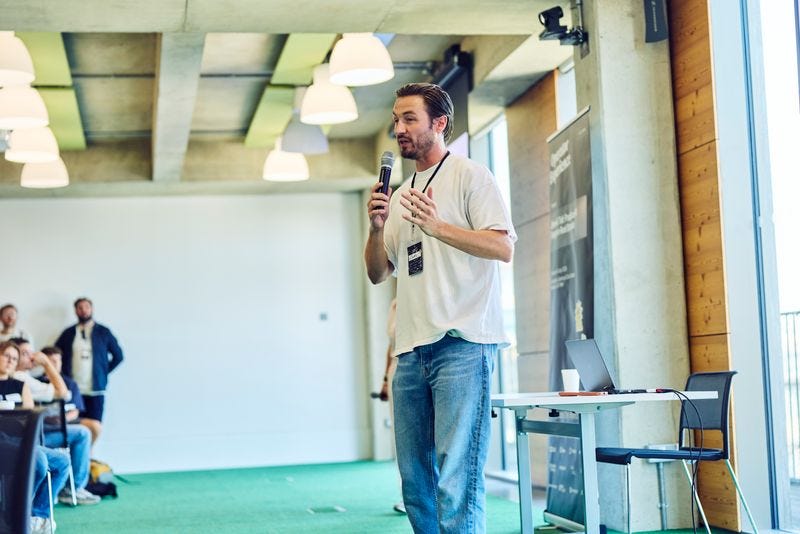
Two closing thoughts from Lawrence that summarise where every brand in the room is heading. First, with 85 to 90% of their tools now connected to their AI setup, the constraint has moved: it’s no longer capability or data access, it’s training and empowering non-technical teams, and navigating the culture. Rough Trade sells music as art and won’t be publicly pro AI music, while internally a small-margin business with a DIY ethos has a responsibility to use the tools.
He called the polarised debate what it is, tech-utopian on one side and doom on the other, and planted the business in the middle: it’s a tool, and the DIY tradition now scales. Second, the confession everyone recognised: a period of what he called AI mania around March, everything suddenly buildable, like walking into a bakery where everything’s free, and the resulting discipline that the question is no longer can we build it. It’s should we, and in what order.
The afternoon: three rooms
After lunch the room split into three rotating groups. In one breakout, Henrik from Dema ran a build-along: not a demo watched from chairs but the room building on the platform together, which is the difference between seeing conversational analytics and having made some.
In the other, our own Luke ran a session on transcription, everything he’s learned about going from a meeting recorder being switched on to transcripts becoming an actual working asset in the business, the pipeline from captured conversation to searchable, usable operational knowledge. If you’ve ever recorded a meeting and then done nothing with it, which is everyone, this was the session.
The main room ran the partner roundtables: Dema, Loop, Torque, Emfas, High Cohesion, Centra, ProCarrier, Torque, Resourced, Whanau and us, ten minutes a table, a whistle, and everybody moves. We won’t reproduce table conversations, that’s the covenant of the format, recorders on every table and flip it over if you want off the record. But we can report what recurred across tables independently, because that’s data: returns remains a data blind spot at every size of brand, and the wholesale side of it is a decade behind the consumer side.

The 3PL-versus-own-warehouse question is being asked everywhere, and the useful conversations were about what quotes hide, not about rates. Automation debt is arriving on schedule at the sophisticated brands. And the morning’s theme repeated all afternoon in different clothes: the constraint has moved from capability to judgement, priorities and people.
The rooftop opened at three. What was said up there stays up there.

The ask
Luke and Lauren closed the formal part with a request we’ll amplify, because it’s the right one. OX grew out of the back office, finance, ops, merchandising, customer service, systems, the functions this industry’s events chronically underserve, and the goal is cross-functional: if the day was valuable, bring colleagues from the other functions next time, because the catalyst thing only works if it spreads. We’ll share OX3 details as soon as they exist. If your job is running an ecommerce operation rather than talking about one, be in the room.