


A trading card company is auctioning its hype drops at falling prices. It feels grubby. It might be the most honest thing in retail.
Panini sells basketball cards. Sealed boxes, the kind grown men queue for. When a hot product drops it sells out in seconds. An hour later it’s on eBay and StockX at double. You know the pattern. Sneakers do it. Consoles do it. Gig tickets do it. Anything with hype and a fixed price ends up here.
So Panini tried something. On their First Off The Line boxes they run a Dutch auction. The price opens stupidly high, say a thousand dollars a box, and drops every couple of minutes until the thing sells out. You pay whatever the screen says when you click. Wait for it to fall further and you risk it selling out from under you. The first time they did this, in 2019, boxes opened at $1,000 and sold out before the price dropped to $900. People paid near the top. Willingly.
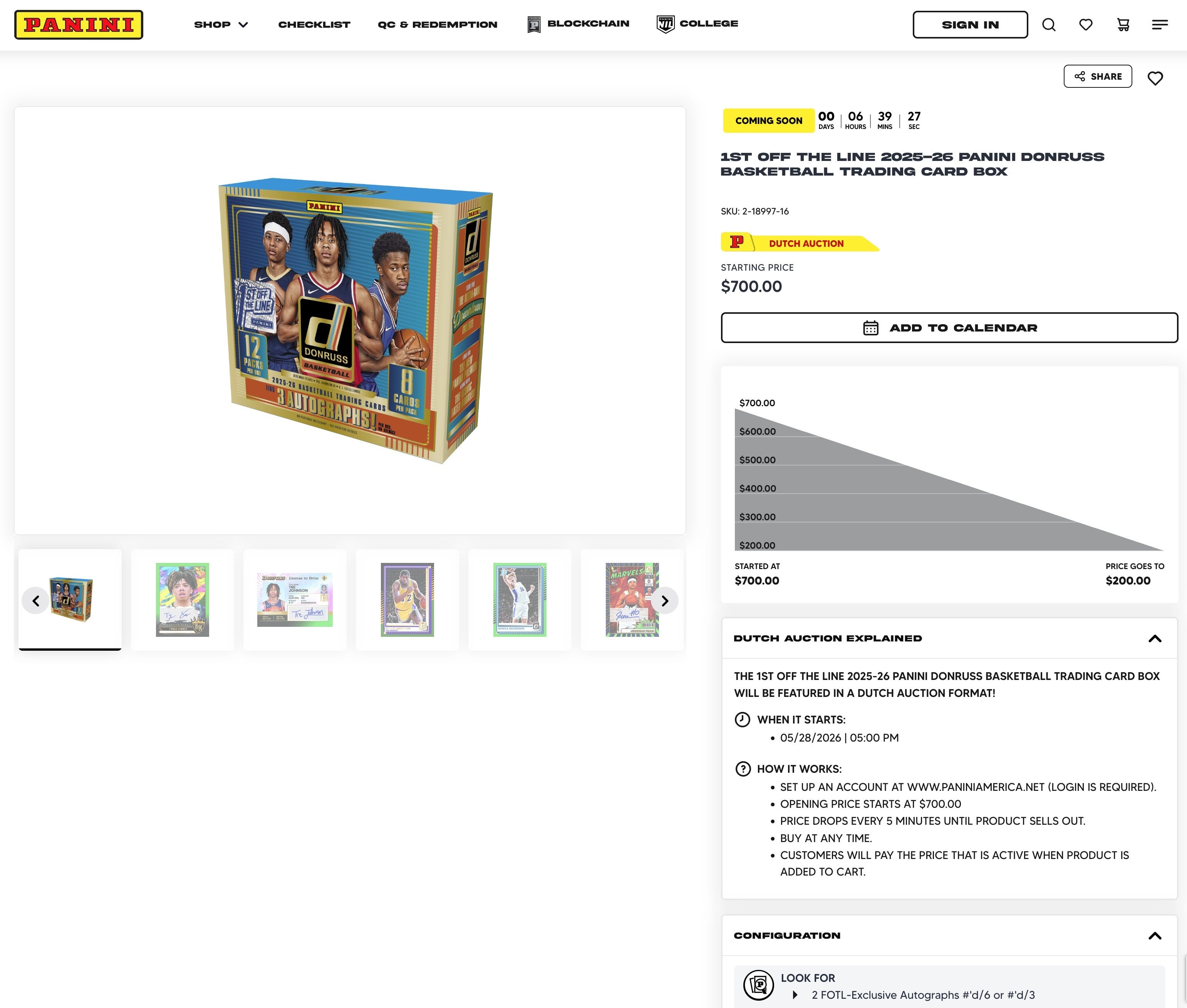
Panini didn’t invent this. Google floated its shares the same way in 2004. Topps, who now hold the big sports licences, have started running the format on their own drops. So it isn’t a one-off. It’s spreading.
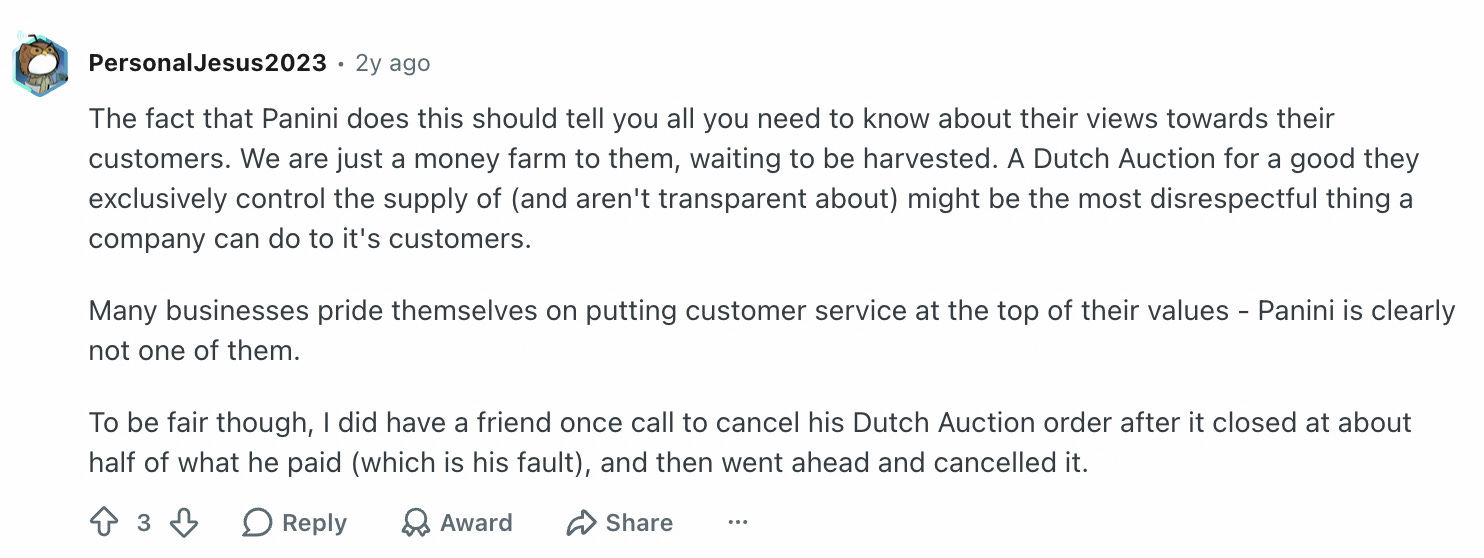
Reddit hates it. Of course Reddit hates it. The complaint is simple and fair. This just lets Panini charge more. The margin is already baked into the retail price. So why are loyal collectors being asked to pay over the odds to the people who made the thing?
Here’s the bit worth sitting with.
The markup was always there. A box that sells for £80 and instantly flips for £200 has a £120 premium sitting on top of it. That money is real. The only question has ever been who pockets it. Under the normal system the answer is a bloke with a bot and a stack of cards. The loyal collector rarely gets the box at retail at all. They get a sold-out page and a StockX listing. The cheap price was a fiction. It was never really for them.
All the Dutch auction does is move that £120 from the scalper to Panini. Same premium. Same buyer paying it. Different pocket.
Put like that, it’s almost admirable. It cuts out the middleman. The manufacturer captures the value of its own hype instead of gifting it to resellers. If you ran any other business and found a stranger skimming the entire upside off your best product, you’d want it back too.
So why does it feel wrong?
Because a fixed price is a promise and an auction is a negotiation. When a brand posts a price and you pay it, you feel fairly treated, even after queuing for hours. When a brand makes you bid against everyone else, you can win and still feel mugged. Nothing about the money changed. The feeling did.
This is the thing brands forget. People will happily pay a scalper double, because that happens off to one side, in the shadows, nothing to do with the brand they love. The same person feels betrayed paying the brand directly. We don’t mind the markup. We mind seeing the markup. The Dutch auction’s only real crime is switching the lights on.
Which is also its risk. Scalping damages nobody’s brand. Panini scalping, in public, with its own name on it, damages Panini. You can be economically right and still lose the room.

So, is there a better way to get product into the hands of loyal fans? Yes. But every option comes with a bill.
Raise the price and say why, plainly. Honest, unpopular, keeps the relationship clean.
Run a ballot. Everyone enters, winners drawn at random, price fixed. Nike do this. It feels fair, because luck feels fair in a way money never does.
Gate it to verified fans. Loyalty points, order history, account age. Hard to game, costly to build, and you’ll still be accused of picking favourites.
Or do nothing. Let the resellers keep the premium and treat the secondary market as free advertising for how badly people want your stuff.
There’s no clean answer. There never is. Scarcity always creates a premium, and that premium always lands in somebody’s pocket. Pretending otherwise is the actual mistake.
Panini have decided the pocket should be theirs. It’s the rational call. It might also be the one that costs them the thing that made the cards worth fighting over in the first place.
Worth watching whether that top price sells out. If it does, they were right about the money. Whether they were right about the customers takes a lot longer to show up.