


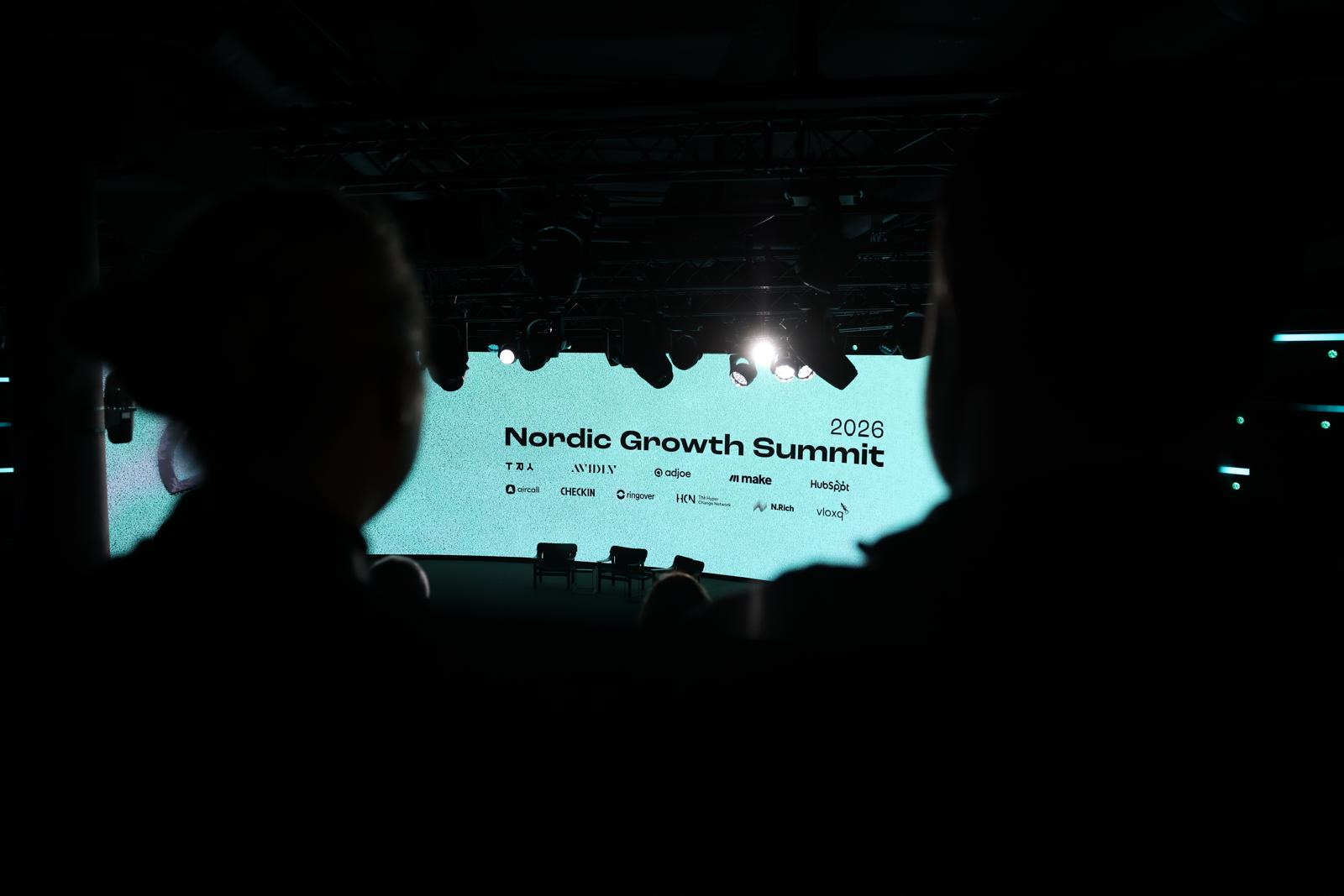
Last week I was invited to speak at the Nordic Growth Summit in Stockholm. The talk was built around a framework I’ve been developing for navigating the AI era — both at an organisational level and an individual one. Relevant to any industry, but I brought it to life through what I’ve seen working inside fashion and lifestyle brands over the past decade.
This is what I shared.
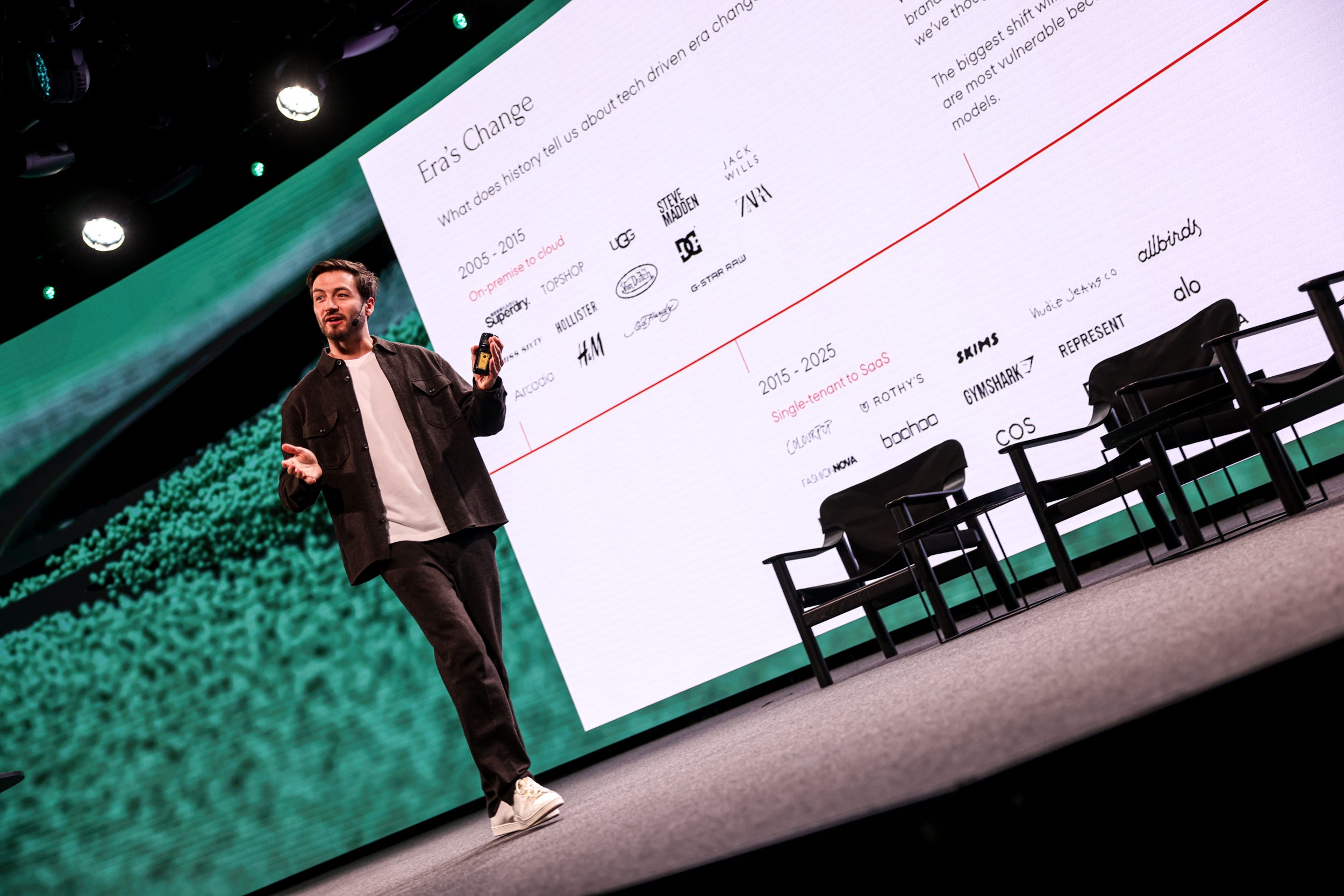
Eras Change. Always Have.
The retail and fashion industry has been here before, twice in recent memory.
Between 2005 and 2015, the shift was from on-premise infrastructure to cloud. Between 2015 and 2025, it was from single-tenant systems to SaaS. Both transitions created a new cohort of breakout brands, and ended the relevance of those who didn’t adapt. The brands on the wrong side of both those eras didn’t disappear because they made bad products. They disappeared because their operating models couldn’t move.
We’re now entering the third era: 2025 to 2030. The question isn’t whether AI will reshape how brands operate. It’s which brands will be on the right side of it.
My position is direct: AI will allow brands to scale further, faster, and with leaner teams than most have previously thought possible. The biggest shift won’t be technological. It’ll be organisational. And established brands are the most exposed, precisely because they have the most established org models to unpick.
The Lesson Isn’t What You Think
To make the point concrete, I drew on two brands I worked with simultaneously, starting in 2016.
The first was Ivy Park within the Arcadia Group; huge, hierarchical, and fundamentally risk averse. The dominant mentality: too big to fail, cynical about what smaller brands were doing, prone to groupthink. By 2020, Arcadia was bust.
The second was Gymshark; fast-growing, nimble, wired to learn from failure. The mentality there was different: hire good people, trust them, and move quickly enough to extract lessons from mistakes. By 2020, Gymshark was a unicorn.
Same era. Same market conditions. Opposite outcomes. The lesson isn’t that size is a liability, it’s that mindset and organisational adaptability are the real variables. Which makes the current moment more urgent for any brand that has grown into complexity.
The Organisational Challenge: From Silos to Process Teams
The structural problem most brands are running into is one they built themselves. Traditional vertical departments; each team fixing its own function, each head of department accountable to their own metrics, made sense in an era where specialisation was a competitive advantage. In an AI-fluent organisation, that same structure becomes a liability.
Siloed functions preserve handoff inefficiencies, create metric misalignments, and generate duplication that compounds over time. When agentic workflows enter that structure, they don’t resolve it, they expose it faster.
The alternative is process teams: squads organised around end-to-end outcomes rather than functions. New product launch. Margin optimisation. Stock-turn. Product quality. Teams built this way surface root causes rather than symptoms, align on shared metrics, and learn iteratively. In a hybrid model, humans and agents working together, human resource shifts from doing the work to directing, analysing, and improving it. That’s a fundamentally different job description, and most org charts aren’t designed for it.
The Individual Challenge: Which Profile Are You?
The organisational problem has an individual equivalent. The framework I use maps people on two axes: AI clarity (how well someone understands where AI fits and what it can actually do) and enablement ability (how effectively they bring others along). Four profiles emerge.
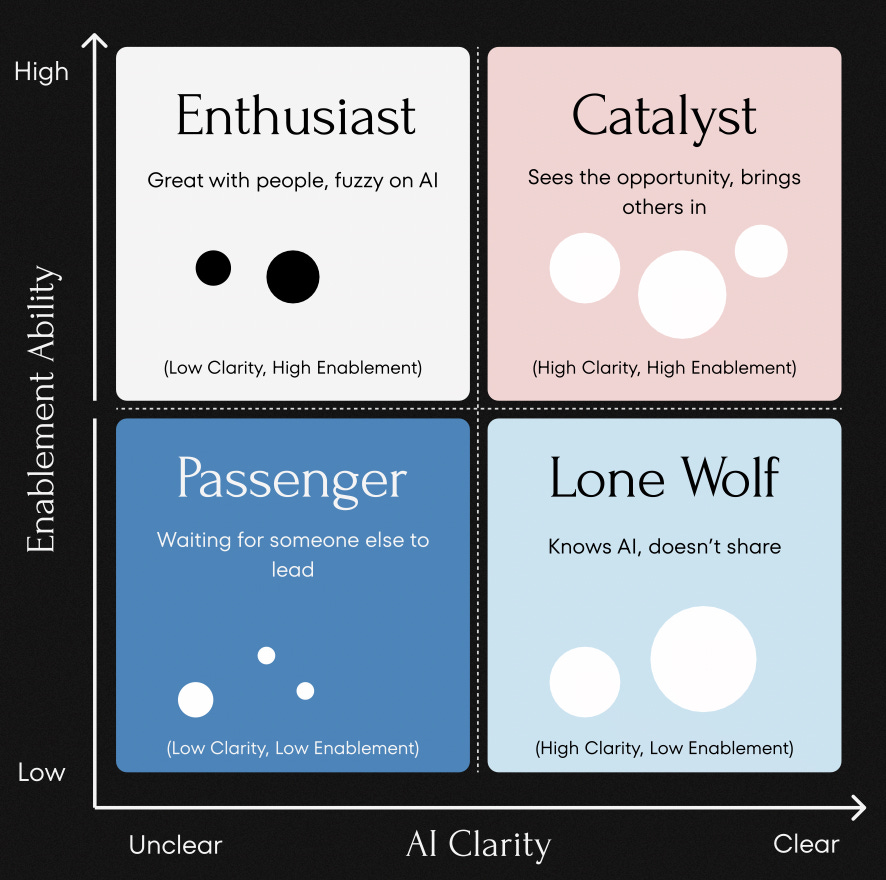
The Enthusiast is high on enablement, fuzzy on AI, great with people, working from instinct rather than understanding.
The Passenger is low on both, waiting for someone else to lead.
The Lone Wolf has genuine AI capability but operates in isolation, building things that don’t scale because nobody else can run with them.
And then there’s the Catalyst: high clarity, high enablement. Sees where AI fits, builds something useful, and brings the rest of the team with them.
Every brand will have a mix of all four right now. That’s expected. What matters is direction of travel.
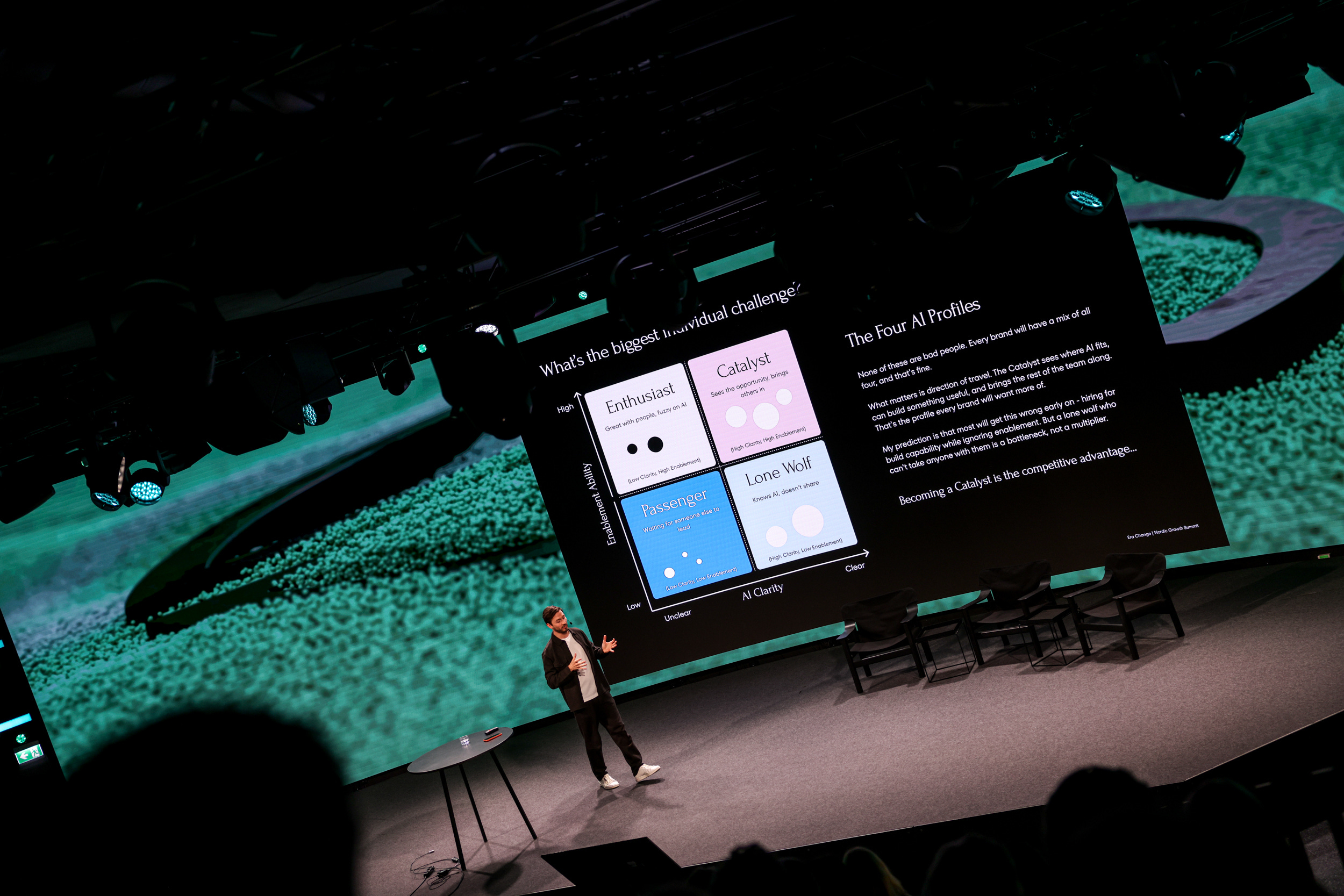
My prediction for where most brands get this wrong: hiring for build capability while ignoring enablement. A lone wolf who can’t bring anyone with them isn’t a multiplier, they’re a bottleneck. The Catalyst is the profile every brand will want more of. And importantly, it’s a learnable combination of skills, not a fixed personality type.
What This Means in Practice
Five implications worth naming plainly:
Technology drives era shifts, creating breakout brands while making incumbents that don’t adapt irrelevant.
Resistance to change isn’t caution; it’s risk, and inertia massively increases the probability of becoming non-competitive.
The brands that adopt early and well will scale faster with higher margins.
Vertical silos won’t survive the transition, cross-functional process teams are how brands adapt at pace.
And Catalysts will be the scarce resource every brand is competing for.
AI is both the biggest threat and the biggest opportunity facing established businesses today. The organisations that become adaptive, and the individuals who push themselves toward becoming Catalysts, are the ones history suggests will win.
History has a funny way of repeating itself.